Disclosure: This post has affiliate links, so I may earn a small commission (at no extra cost to you) if you shop through them. Thanks for your support!
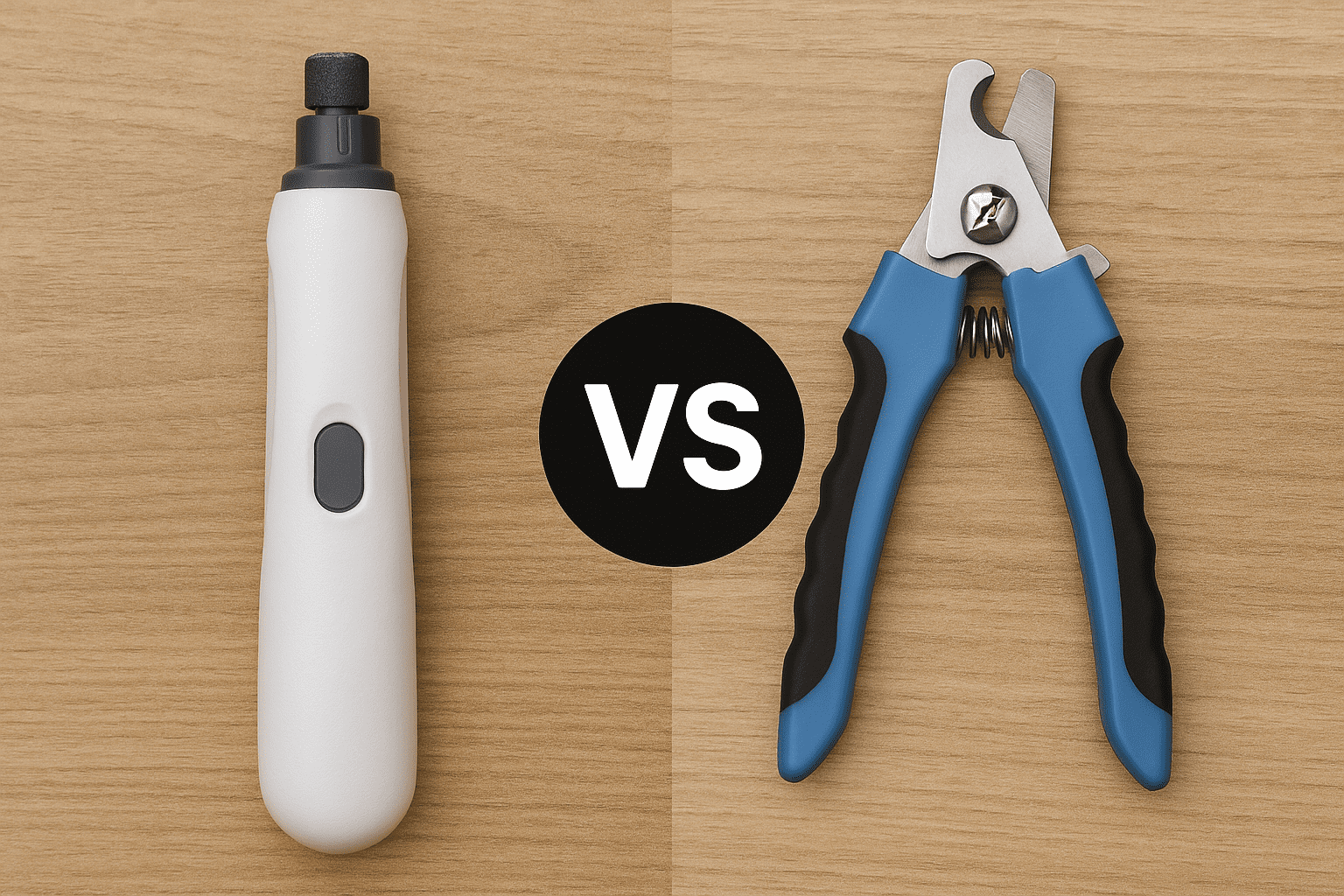
Dog Nail Grinder vs Clippers: Complete Guide to Choosing the Best Tool
Keeping your dog’s nails at the right length is essential for their health and comfort. When it comes to trimming those nails, you have two main options: grinders and clippers. Each tool has its own strengths and works better for different situations.
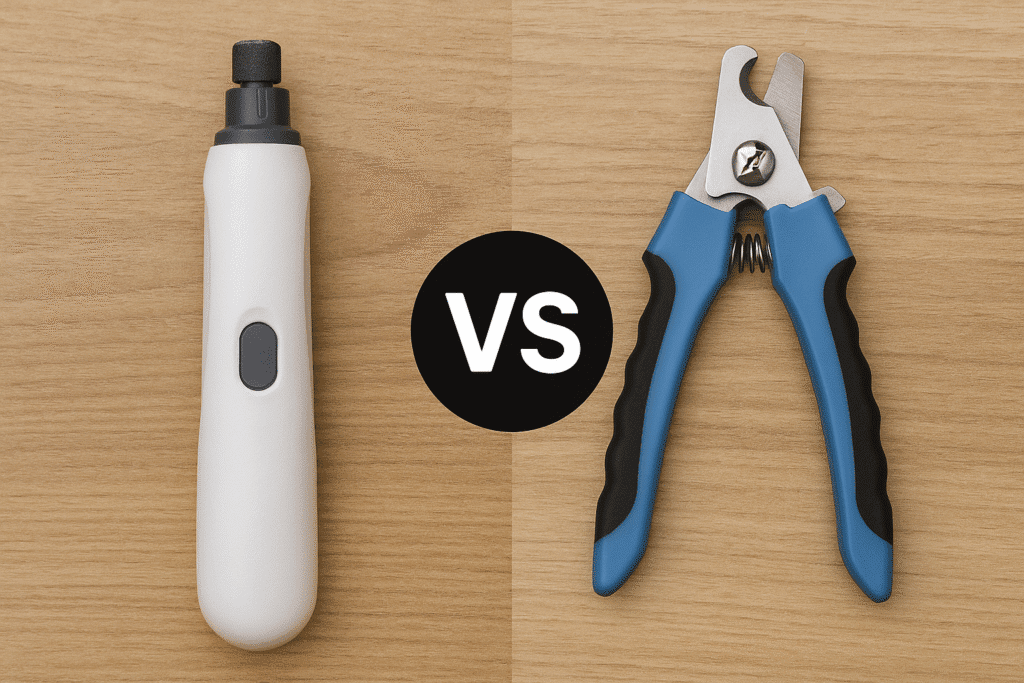
Dog nail grinders are generally better for beginners and dogs with dark nails, while clippers work well for experienced owners who want speed and affordability. Grinders gradually file down nails, making it harder to accidentally cut the quick. Clippers offer a faster approach but require more skill to use safely.
Your choice depends on your dog’s size, nail color, and temperament, plus your own experience level. We’ll break down how each tool works, compare their benefits and drawbacks, and help you decide which option fits your needs best.
Key Takeaways
- Grinders are safer for beginners and reduce the risk of cutting the quick in your dog’s nail
- Clippers are faster and more affordable but require more skill to use properly
- The best choice depends on your dog’s size, nail thickness, and your comfort level with each tool
Understanding Dog Nail Maintenance
Proper nail care prevents painful overgrowth, reduces injury risk, and keeps your dog comfortable during daily activities. Regular trimming protects your dog’s joints and prevents damage to your home furnishings.
Why Nail Care Is Essential
Dog nail grooming plays a crucial role in your pet’s overall health and comfort. Long nails force your dog to change how they walk and stand.
This altered posture puts extra stress on their joints. Over time, this can lead to arthritis and other joint problems.
Overgrown nails also increase the risk of painful breaks and tears. When nails get too long, they can catch on carpets, furniture, or outdoor surfaces.
Health Benefits:
- Prevents joint pain and arthritis
- Reduces risk of nail injuries
- Maintains proper foot alignment
- Improves traction and balance
Your furniture and floors also benefit from regular nail trims. Short nails cause less scratching and damage to hardwood floors, upholstery, and clothing.
Dog grooming professionals recommend trimming nails every 3-4 weeks. Active dogs who walk on concrete may need less frequent trims since pavement naturally wears down nails.
The Anatomy of a Dog’s Nail
Understanding nail structure helps you trim safely and effectively. Dog nails contain two main parts that you need to know about.
The nail shell is the hard, outer portion that grows continuously. This is the part you trim during regular maintenance.
Inside the nail shell lies the quick. This pink area contains blood vessels and nerves that supply the nail.
| Nail Part | Description | What Happens If Cut |
|---|---|---|
| Nail Shell | Hard outer layer | Safe to trim |
| Quick | Pink interior with blood vessels | Painful bleeding |
The quick appears pink in light-colored nails but stays hidden in dark nails. This makes trimming darker nails more challenging for most dog owners.
As nails grow longer, the quick also extends forward. Regular trimming helps keep the quick shorter and makes future trims easier.
The nail grows from the base near the toe pad. Healthy nails should curve slightly and taper to a point.
Risks of Neglected Nail Care
Skipping regular nail trims creates serious problems for your dog’s health and comfort. Long nails change how your dog moves and can cause lasting damage.
Immediate Problems:
- Painful walking and standing
- Nails catching and tearing
- Scratches on family members
- Damage to home surfaces
Overgrown nails force your dog’s toes to spread unnaturally. This puts pressure on joints in the feet, legs, and spine.
The quick grows longer when nails stay untrimmed for months. This makes future nail care more difficult and increases bleeding risk.
Long-term Health Issues:
- Joint degeneration and arthritis
- Muscle strain and fatigue
- Permanent changes to foot structure
- Increased fall and injury risk
Some dogs develop infections around overgrown nails. Dirt and bacteria can build up in the crevices where long nails meet the toe pads.
Regular dog nail grooming prevents these problems and keeps your pet comfortable throughout their life.
Dog Nail Grinders: Overview and How They Work
Dog nail grinders use rotating wheels to file down your pet’s nails gradually. These electric tools offer precise control and work well for dogs with thick or dark nails.
What Is a Dog Nail Grinder
A dog nail grinder is an electric tool that files your dog’s nails instead of cutting them. The device looks similar to a small rotary tool or electric file.
Most nail grinders are cordless and rechargeable, making them easy to handle during grooming sessions. They typically run for several hours on a full charge.
Key components include:
- Motor housing
- Grinding wheel or drum
- Speed control settings
- Safety guard
- LED lights (on some models)
The main advantage is that grinders reduce the risk of cutting into the quick. This makes them popular with new dog owners who lack experience with nail trimming.
How Dog Nail Grinders Operate
Dog nail grinders work by using a quickly rotating grinding wheel to file down nails. The wheel is covered with abrasive material that gradually wears down the nail.
You hold the grinder against your dog’s nail and let the rotating motion do the work. The process takes longer than clipping but gives you more control.
Operating steps:
- Turn on the grinder at low speed
- Hold your dog’s paw firmly
- Touch the nail to the grinding wheel
- Move the grinder around the nail tip
- Check progress frequently
The grinding action creates nail dust, so work in a well-lit area. Some dogs need time to get used to the vibration and humming sound.
Features of Modern Nail Grinders
Today’s nail grinders come with several useful features that make grooming easier. Most models offer multiple speed settings for different nail types and dog sizes.
Common features include:
| Feature | Purpose |
|---|---|
| Variable speeds | Control grinding rate |
| LED lights | Illuminate work area |
| Quiet motors | Reduce noise stress |
| Ergonomic grips | Improve handling |
| Rechargeable batteries | Cordless operation |
Many grinders have safety guards that prevent you from grinding too much nail at once. The guards also help contain nail dust during use.
Grinding stones need replacement every few months depending on how often you use the tool. Some models use replaceable sanding bands instead of grinding wheels.
Higher-end grinders run quieter and have longer battery life. They often include carrying cases and multiple grinding attachments for different nail sizes.
Dog Nail Clippers: Types and Functionality
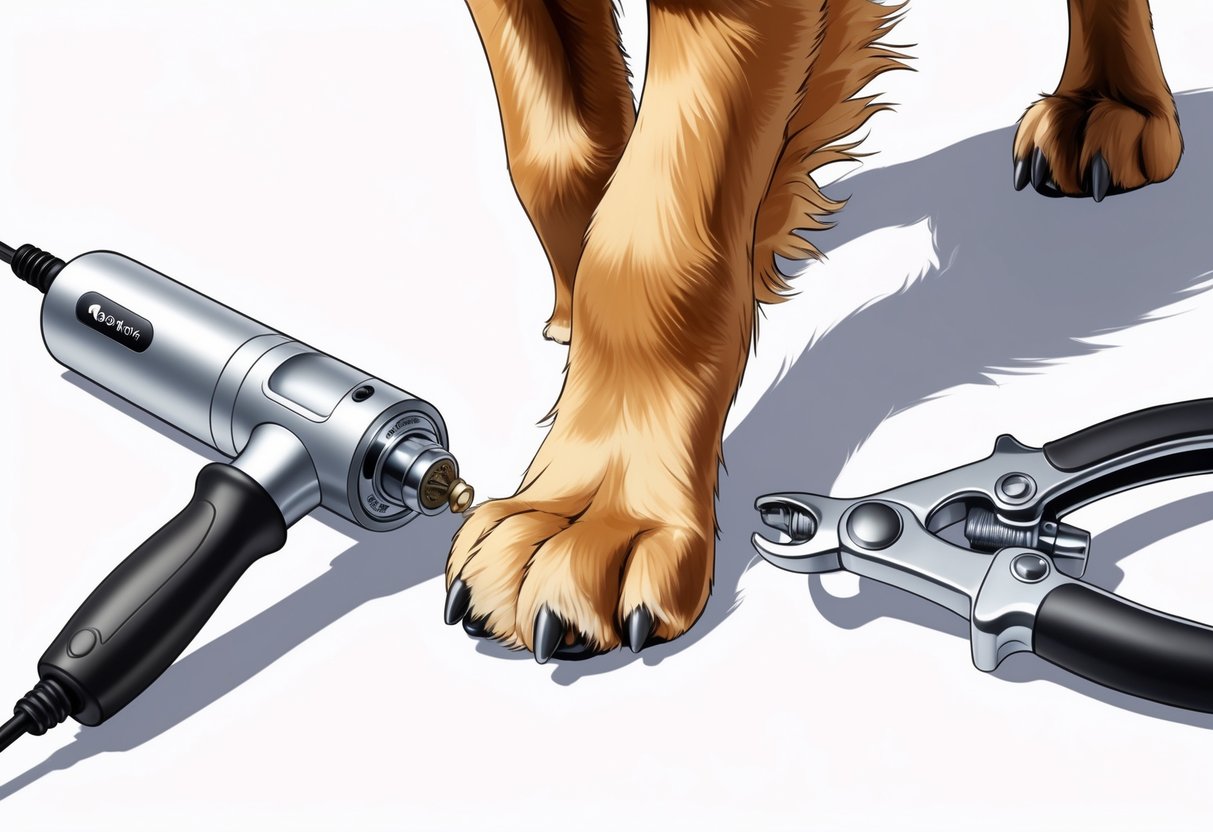
Dog nail clippers come in three main designs that work differently to cut your dog’s nails. Each type offers specific benefits for different dog sizes and nail thicknesses.
What Are Dog Nail Clippers
Dog nail clippers are handheld tools designed to cut through your dog’s nails quickly and cleanly. Most plier-style dog nail clippers have a spring between two blades that clamp down when you squeeze the handles.
Three main types exist:
- Plier-style clippers – Most common design with spring-loaded blades
- Scissor-style clippers – Look and operate like regular scissors
- Guillotine clippers – Feature a top blade that cuts from above
Plier-style clippers work best for most dogs. They often include safety guards to prevent cutting nails too short. The spring mechanism makes them easy to control during trimming sessions.
Scissor-style clippers work well for small dogs and toy breeds. They don’t usually have safety guards, which makes them faster but riskier to use.
Guillotine vs Scissor-Style Clippers
Guillotine clippers use a single blade that moves downward to cut the nail. You insert your dog’s nail through a small hole, then squeeze to activate the cutting blade. Guillotine nail clippers often require less force than plier-style clippers and give you better control.
These clippers work best on small to medium dogs. Large dogs with thick nails can be harder to cut with guillotine clippers.
Guillotine clipper benefits:
- Cleaner cuts with less crushing
- Better control during trimming
- Less hand fatigue from squeezing
Scissor-style clippers cut nails the same way regular scissors cut paper. The two blades meet to slice through the nail. They work fast but usually don’t come with a safety guard.
Scissor-style clipper features:
- Quick cutting action
- No safety guard protection
- Best for experienced users
- Ideal for small dog breeds
How to Use Dog Nail Clippers
Start by holding your dog’s paw firmly but gently. Look for the pink quick inside the nail – this contains blood vessels and nerves. Cut only the white or clear part of the nail.
Position the nail clippers perpendicular to the nail. Make quick, confident cuts about 2mm away from the pink quick. Dog nail clippers work more quickly than dog nail grinders once you learn proper technique.
Step-by-step process:
- Hold paw steady
- Identify the quick
- Position clippers correctly
- Make swift, clean cuts
- Reward your dog with treats
Trim nails every 3-4 weeks for most dogs. Dogs that walk on pavement may need less frequent trims since concrete naturally wears down nails.
If you accidentally cut the quick, apply styptic powder to stop bleeding. The nail will heal within a few days.
Dog Nail Grinder vs Clippers: Key Differences

Nail grinders use a rotating surface to gradually wear down nails, while clippers cut through nails with sharp blades. The vibration and noise levels differ significantly between these tools, affecting your dog’s comfort during grooming sessions.
Comparing the Cutting Mechanism
Nail grinders work by using a rotating abrasive surface that gradually wears down your dog’s nail. This process happens slowly and gives you more control over how much nail you remove.
Nail clippers use sharp blades to cut straight through the nail in one motion. You get two main types: guillotine clippers with a hole for the nail and scissor-type clippers that work like scissors.
The grinding method creates a smoother finish on the nail. Clippers can sometimes leave behind a ragged cut that may need filing.
Clippers work much faster than grinders. You can trim a nail in seconds with clippers, while grinding takes longer to achieve the same result.
Grinders need electricity or batteries to operate. Clippers are manual tools that don’t need any power source.
Noise, Vibration, and Comfort
Dog nail grinders produce significant noise and vibration during use. The motor creates a buzzing sound that can frighten nervous dogs.
You need to help your dog get used to the grinder’s sound and vibration before using it. Some dogs never adjust to these sensations.
Nail clippers make very little noise when cutting. They don’t vibrate or create ongoing sounds that might scare your pet.
Grinders can heat up during extended use, which may make your dog uncomfortable. You should use grinders in short sessions to prevent overheating.
Clippers don’t generate heat during use. They stay at room temperature throughout the grooming session.
The pressure from clippers can cause discomfort for some dogs. Grinders apply gentler pressure over time.
Precision and Risk of Cutting the Quick
Grinders offer better control when trimming your dog’s nails. The gradual removal process makes it easier to stop before reaching the quick.
You can still cut the quick with a grinder, but it happens less often than with clippers. The slow grinding gives you time to notice when you’re getting close to the sensitive area.
Nail clippers pose a higher risk of cutting into the quick. You’re more likely to hit the quick with nail clippers than with a grinder.
Dark nails make it harder to see the quick inside. Many owners prefer grinders for dogs with black nails because of the added control.
Both tools require practice to use safely. Neither eliminates the risk completely, but grinders give you more chances to stop before causing injury.
Suitability for Different Nail Types
Thick, long nails work better with grinders in most cases. Grinders handle thick nails more easily than clippers.
Large dogs often have tough nails that resist cutting. Clippers may struggle to cut through thick nails cleanly and can cause splitting.
Thin, brittle nails can work with either tool. Small dogs with delicate nails may do well with either option.
Scissor clippers work best for dogs with thick nails when you choose clippers over grinders. They generate more cutting pressure than guillotine styles.
Dogs with long hair around their paws need extra care with grinders. Hair can wrap around the grinder bands and cause problems during grooming.
Pros and Cons of Each Tool
Dog nail grinders offer greater control and reduce the risk of cutting the quick, while nail clippers provide speed and affordability. Each tool has specific benefits and limitations that affect your grooming experience.
Advantages of Dog Nail Grinders
Dog nail grinders give you more control when trimming your dog’s nails. The gradual filing process makes it less likely to cut the nail quick, which is especially helpful for beginners.
Better for Dark Nails Grinders work well on dogs with dark nails where you can’t see the pink quick inside. You can file slowly and watch for the dark center that signals you’re getting close to the quick.
No Nail Chipping The grinding action creates a smooth finish without cracking or chipping the nail. This is important for large dogs with thick nails that might split when clipped.
Ideal for Large Dogs Dog nail grinders are easier to use on larger dogs because thick nails respond better to gradual grinding than sharp cutting.
Drawbacks of Dog Nail Grinders
Dog nail grinders cost more upfront than clippers. You’ll also need to buy replacement grinding wheels every few months, adding to the ongoing expense.
Noise and Vibration Issues Many dogs don’t like the humming and grinding sounds these tools make. The vibration against their nails can also make some pets nervous or anxious.
Slower Process Grinding takes longer than clipping. You need to hold your dog’s paw steady while the grinder slowly files down each nail.
Battery Dependence Most grinders are cordless and need regular charging. A dead battery means you can’t trim nails until it recharges.
Advantages of Dog Nail Clippers
Dog nail clippers work fast once you learn proper technique. You can quickly snip through each nail instead of waiting for gradual filing.
Budget-Friendly Option Dog nail clippers are much more affordable than grinders. A good pair can last 1-2 years with proper care.
No Power Required Clippers don’t need batteries or charging. They’re always ready to use and perfect for travel or emergency nail trims.
Three Style Options You can choose from plier-style, scissor-style, or guillotine clippers based on your dog’s size and your comfort level.
Drawbacks of Dog Nail Clippers
The biggest risk with clippers is accidentally cutting the quick, especially on dogs with dark nails. This causes pain and bleeding that can make future nail trims stressful.
Potential for Nail Damage Dull clipper blades can crush or split nails instead of making clean cuts. This problem gets worse with thick nails on large breed dogs.
Requires More Skill You need steady hands and good judgment to clip nails safely. The higher risk of cutting the nail quick makes clippers less forgiving for beginners.
Sharp Clipping Noise Some dogs get scared by the sharp snapping sound clippers make when cutting through nails.
Choosing the Best Tool for Your Dog
The right tool depends on your dog’s specific characteristics and your personal situation. Dog size, nail type, and temperament play major roles in determining which option works best for your pet.
Factors to Consider: Dog Size, Nail Thickness, and Behavior
Large dogs with thick nails often benefit from grinders. Traditional nail clippers can crack or chip thick nails, especially on giant breeds.
Small to medium dogs typically do well with either tool. Their thinner nails are easier to cut cleanly with clippers.
Nail color affects your choice significantly. Dark nails hide the pink quick inside, making it hard to see where to stop cutting. Grinders work better for dogs with darker nails because they remove nail gradually.
Light-colored nails show the quick clearly. This makes clippers safer to use since you can see exactly where to cut.
Your dog’s temperament matters greatly. Some dogs fear the grinding noise and vibration. Others dislike the sharp snapping sound of clippers.
Watch how your dog reacts to different sounds and sensations during dog grooming sessions.
Owner Skill Level and Comfort
Beginners should consider grinders for dog nail grooming. They’re less likely to cut the nail quick because they remove nail slowly.
Grinders give you more control and time to stop before hitting the sensitive pink area inside the nail.
Experienced owners often prefer the speed of nail clippers. You can trim all nails quickly once you know proper technique.
Clippers require steady hands and good judgment about where to cut. One wrong move can cause bleeding and pain.
Practice makes perfect with either tool. Start slowly and trim just small amounts at first.
Consider your confidence level and willingness to learn new techniques for dog grooming.
Budget and Maintenance Needs
Initial cost favors clippers significantly. Quality nail clippers cost much less than electric grinders.
A good set of clippers can last 1-2 years with proper care. No electricity or charging required.
Ongoing expenses add up with grinders. You must replace grinding wheels every few months. The motor typically lasts 1-2 years before needing replacement.
Convenience factors vary by tool. Clippers work anywhere without power. Grinders need charging and may die mid-session.
Storage and portability favor clippers. They take up minimal space and travel easily.
Grinders require more storage space and careful handling to avoid damage.
Safe and Effective Nail Trimming Tips
Proper technique and preparation make nail trimming safer for both you and your dog. The key is learning to spot the quick, getting your dog comfortable with tools, and finishing with smooth edges.
Avoiding Cutting the Quick
The quick is the pink area inside your dog’s nail that contains blood vessels and nerves. Cutting it causes pain and bleeding.
For light-colored nails, look for the pink area inside the nail. Stop cutting before you reach this area. Leave about 2mm of space between your cut and the quick.
Dark nails make it harder to see the quick. Dog nail grinders work better for dark nails because you can remove small amounts at a time.
Watch for these signs as you trim:
- White chalky center – safe to continue cutting
- Dark circle in center – you’re getting close to the quick
- Pink or red color – stop immediately
If you do cut the quick, apply styptic powder or cornstarch to stop bleeding. The nail will heal in a few days.
Desensitizing Dogs to Grooming Tools
Start by letting your dog see and smell the dog nail clippers or dog nail grinder. Give treats when they stay calm around the tools.
Touch your dog’s paws daily when they’re relaxed. Gently press on each nail to extend it. Reward calm behavior with treats and praise.
Turn on a dog nail grinder near your dog without using it. Let them get used to the sound and vibration. Some dogs need several sessions to feel comfortable.
Practice holding the tools against your dog’s nails without cutting. This helps them learn that the tools won’t hurt them.
Start with just one or two nails per session. Gradually increase the number as your dog becomes more comfortable.
Aftercare and Smoothing Techniques
Dog nail clippers can leave sharp edges that snag on carpets and scratch skin. File or sand these edges smooth after clipping.
A dog nail grinder naturally creates smooth, rounded edges. This is one advantage grinders have over traditional clippers.
Check each nail after trimming. Look for cracks, splits, or rough spots that need attention.
If you notice bleeding, clean the area with warm water. Apply pressure with a clean cloth until bleeding stops.
Watch your dog’s behavior after trimming. Excessive licking or limping might mean a nail is still too long or has a rough edge.
Trim nails every 2-4 weeks depending on how fast they grow. Regular trimming keeps nails healthy and makes each session easier.
Frequently Asked Questions
Many dog owners have specific questions when deciding between grinders and clippers for nail care. Understanding the practical differences, safety features, and investment value helps you make the best choice for your pet’s needs.
What are the advantages of using a dog nail grinder compared to clippers?
Dog nail grinders offer several key benefits over traditional clippers. They provide better control and reduce the risk of cutting the quick accidentally.
Grinders work especially well for dogs with thick or dark nails. The gradual filing process lets you see the nail bed as you work.
Grinders create a smoother finish compared to the blunt cut from clippers. This eliminates sharp edges that might catch on fabric or furniture.
Large dogs benefit most from grinders because their thick nails can crack or chip with regular clippers. The grinding action prevents this damage.
How do I choose the best nail grinder for my dog?
Look for a grinder with multiple speed settings. Start with lower speeds for nervous dogs or shorter nails, then increase as needed.
Battery life matters for convenience. Choose models that run for at least two hours on a full charge.
Consider the grinding wheel replacement cost and availability. Some brands make it harder to find replacement parts.
Weight and grip comfort affect how steady you can hold the tool. Test the feel in your hand if possible before buying.
Is it safer to use a nail grinder with a quick sensor on dogs?
Most nail grinders do not have quick sensors built in. You still need to watch for the pink area inside the nail that indicates the quick.
Grinders are generally safer than clippers because they remove nail material slowly. This gives you time to stop before hitting the quick.
The gradual grinding process lets you see changes in nail color or texture. Stop when you see a small dark circle in the center of the nail.
Even with a grinder, you can still cut the quick if you’re not careful. Take your time and grind small amounts at each session.
Can using a dog nail grinder cause my pet discomfort or pain?
Some dogs dislike the vibration and grinding noise that grinders make. This can cause stress during nail care sessions.
The grinding process itself should not hurt when done correctly. Move the grinder in short bursts rather than holding it in one spot.
Heat buildup can make the nail uncomfortable. Keep the grinder moving and take breaks between nails to let them cool.
Start with very short sessions to help your dog get used to the sensation. Reward calm behavior with treats and praise.
What features should I look for in a quiet dog nail grinder?
Low-noise motors help reduce your dog’s anxiety during nail trimming. Look for models specifically advertised as quiet or low-noise.
Multiple speed settings let you use the lowest effective speed. Slower speeds typically produce less noise.
Quality bearings and motor construction reduce vibration noise. Higher-priced models often have better engineering for quieter operation.
Cordless designs eliminate motor noise from being amplified through the power cord. Battery-powered grinders tend to run more quietly.
Are professional dog nail grinders worth the investment for home use?
Professional grinders cost significantly more than basic models. They typically offer stronger motors and longer-lasting components.
The higher upfront cost may be worth it if you have multiple dogs or very thick nails to maintain regularly.
Professional models usually include better warranties and customer support. This matters if you plan to use the grinder frequently.
For occasional use on one dog, a mid-range consumer model provides good results. Save the professional investment for heavy-duty needs.
Disclosure: This post has affiliate links, so I may earn a small commission (at no extra cost to you) if you shop through them. Thanks for your support!